Vegan high protein recipes have a reputation for being expensive. That’s mostly because of pricey protein powders, plant-based meat substitutes, and specialty products lining grocery store shelves. But the reality looks different once you check the math.
According to the U.S. Bureau of Labor Statistics, the average retail price for a pound of dried beans sat at roughly $1.70 in early 2026. And that single pound turns into close to a dozen protein-packed servings once cooked.
This guide walks through the cheapest plant protein sources, soy-free options, macro-friendly swaps, low-carb picks, and a full week of vegan recipes that won’t strain your grocery budget.
What Are the Most Budget-Friendly Vegan High Protein Recipes?
The most budget-friendly vegan high protein recipes are built around dried legumes, tofu, oats, and peanut butter, since these ingredients cost far less per serving than meat substitutes or protein powders while still delivering a solid amount of protein.
A pot of lentil soup, a pan of chickpea curry, or a simple tofu stir-fry can each provide 15 to 25 grams of protein per serving for well under two dollars. These staples also store for months in the pantry, so a single grocery trip can stretch across several weeks of meals.
Also, canned versions add convenience at a slightly higher price, while dried versions cost less but need soaking and cooking time. Either way, these core ingredients form the backbone of nearly every cheap vegan recipe you’ll find, and they pair easily with whatever vegetables happen to be on sale that week.
In fact, you can even make vegan protein bars at home. We have covered the entire no-bake recipe that you can follow here.
Which Cheap Ingredients Work Best in Budget Vegan High Protein Recipes?
Lentils, dried beans, chickpeas, oats, peanut butter, and tofu give you the most protein for the least money. Here’s a rough breakdown of cost per serving against grams of protein, based on typical U.S. grocery prices:
| Ingredient | Typical Cost | Protein Per Serving |
| Lentils (1 cup cooked) | About $0.25 | 18g |
| Dried beans (1 cup cooked) | About $0.20 | 15g |
| Canned chickpeas (1 cup) | About $0.90 | 15g |
| Extra-firm tofu (half block) | About $1.25 | 11g |
| Peanut butter (2 tbsp) | About $0.20 | 7g |
| Rolled oats (½ cup dry) | About $0.125 | 5g |
Prices shift by region and store, but the pattern holds steady: legumes and oats tend to deliver more protein per dollar than packaged plant-based products. Buying dried legumes in bulk bags rather than canned, and choosing plain tofu over flavored or pre-marinated versions, keeps the cost down even further.
How Do You Make Budget Vegan High Protein Recipes With No Soy?
Skip tofu, tempeh, and edamame, and build meals around lentils, chickpeas, black beans, seitan made from vital wheat gluten, and nut or seed butters instead. All of these are naturally soy-free and cost about the same as their soy-based counterparts.
A lentil taco filling, a chickpea and spinach curry, or a batch of seitan strips seasoned with smoked paprika each hit 15 to 20 grams of protein per serving without touching soy. Quinoa and pumpkin seeds work well as toppings if you want to add a bit more protein to a salad or grain bowl.
This swap matters for readers managing a soy allergy or preference, and the ingredients involved are some of the cheapest on the list above, so going soy-free doesn’t raise the grocery bill.
How Can You Find Budget Vegan High Protein Recipes With Macros Already Worked Out?
Use the nutrition label on canned beans, tofu, and oats to calculate macros once, then reuse those numbers every time you cook the same recipe, rather than paying for a premium tracking app. Most packaged legumes and grains list protein, carbs, and fat per serving right on the label, and free apps can log a homemade recipe in a few minutes.
Batch-cooking a big pot of a single dish, like a lentil and rice bowl, also means you only need to calculate the macros once and then divide by the number of containers you fill. This keeps tracking simple without adding any cost to your weekly grocery routine.
What Are Budget-Friendly High Protein Low Carb Vegan Recipes?
Swap rice, bread, and pasta for cauliflower rice, leafy greens, or zucchini noodles while keeping the protein source the same, and the carb count drops without raising the cost.
A tofu scramble with spinach and mushrooms, a tempeh and broccoli stir-fry served over cauliflower rice, or an edamame and cucumber salad with a peanut dressing each keep carbs under 20 grams per serving while still providing 18 to 25 grams of protein. Frozen cauliflower rice and bagged greens are some of the cheapest vegetables at most grocery stores, which keeps these low-carb swaps from adding extra cost to the grocery list.
What Are Budget-Friendly High Protein Vegan Meals Under 500 Calories?
A bowl built around one cup of cooked legumes or six ounces of tofu, plus a generous portion of vegetables and a light dressing, typically lands between 350 and 480 calories while still providing 20 grams of protein or more.
A lentil and roasted vegetable salad, a chickpea bowl with cucumber and tahini, or a tofu and broccoli stir-fry with a small portion of rice all fall in that range. Keeping the oil and dressing portions measured, rather than free-poured, is usually what keeps these meals under the 500-calorie mark, and none of the ingredients involved cost more than a couple of dollars per serving.
What Are the Best Budget Vegan High Protein Recipes for Breakfast, Lunch, and Dinner?
A full day of budget vegan high protein recipes might look like oatmeal with peanut butter for breakfast, a chickpea or lentil salad for lunch, and a one-pot bean chili or tofu stir-fry for dinner, each costing roughly one to two dollars per serving.
- Breakfast: Rolled oats cooked with plant milk, topped with peanut butter and banana, or a tofu scramble with whatever vegetables need using up. If you want more high protein vegan breakfast recipes, find them here.
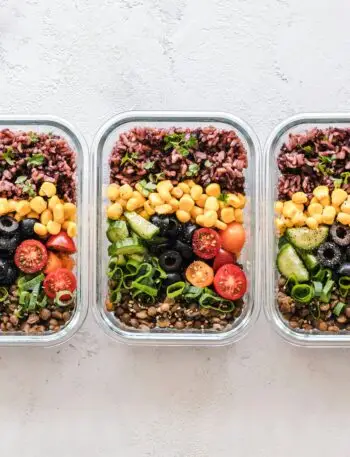
- Lunch: A three-bean salad with a simple vinaigrette, or a grain bowl with chickpeas, brown rice, and roasted vegetables.
- Dinner: A one-pot lentil or bean chili, a sheet-pan tempeh and vegetable bake, or a tofu and vegetable stir-fry over rice.
Repeating two or three dinner bases across the week, with different vegetables and sauces each time, keeps grocery costs predictable and cuts down on food waste.
How Can You Stretch Your Grocery Budget Further With Vegan High Protein Recipes?
Buy dried legumes instead of canned, shop the frozen vegetable aisle, batch-cook a large pot of beans once a week, and use small amounts of nutritional yeast or hemp seeds rather than expensive protein powders to add extra protein.
A one-pound bag of dried beans costs about the same as a single can but yields six to seven times as many servings once cooked and frozen in portions.
Frozen vegetables cost less than fresh in most regions and last far longer in the freezer, cutting down on waste. Buying spices and pantry staples in bulk from international grocery stores, rather than small jars from a regular supermarket, is another way to lower the per-meal cost of flavorful vegan recipes over time.
What Does a Week of Budget Vegan High Protein Recipes Actually Cost?
A full week of budget vegan high protein recipes for one person typically runs between $30 and $45, depending on the region and how much fresh produce gets added. A sample list might include a bag of dried lentils, a bag of dried beans, a few blocks of tofu, a jar of peanut butter, a container of rolled oats, and a mix of frozen and fresh vegetables.
The U.S. Department of Agriculture’s nutrient database lists a cup of cooked lentils at about 18 grams of protein, which means a single two-dollar bag of lentils can supply more than 100 grams of protein across a week of meals.
Planning meals around two or three repeated protein sources, rather than buying a new specialty ingredient for every recipe, is what keeps the weekly total in that range.
Final Words
Eating a variety of vegan high protein recipes doesn’t require a long shopping list or a stack of specialty products. A handful of pantry staples, used in different combinations through the week, cover breakfast, lunch, and dinner without pushing the grocery bill higher than it needs to be.